Writing for People Who Make Things
Pricing, capacity, materials and the economics of staying small on purpose. No fluff, no corporate comfort — just the sharp end of running a craft business without selling your soul to scale.
Gigi's writing on AI & traditional business has been featured multiple times on Note Money in Japan.
 AI Without The Bullshit
AI Is Not One Thing: A Plain-English Guide to Generative, Predictive, Conversational, and Agentic AI
“AI-powered” tells you almost nothing. Learn how generative, predictive, conversational and agentic AI differ—and what makes an AI system safe and useful.
September 22, 2026 · 18 min read
 The Business Behind The Making
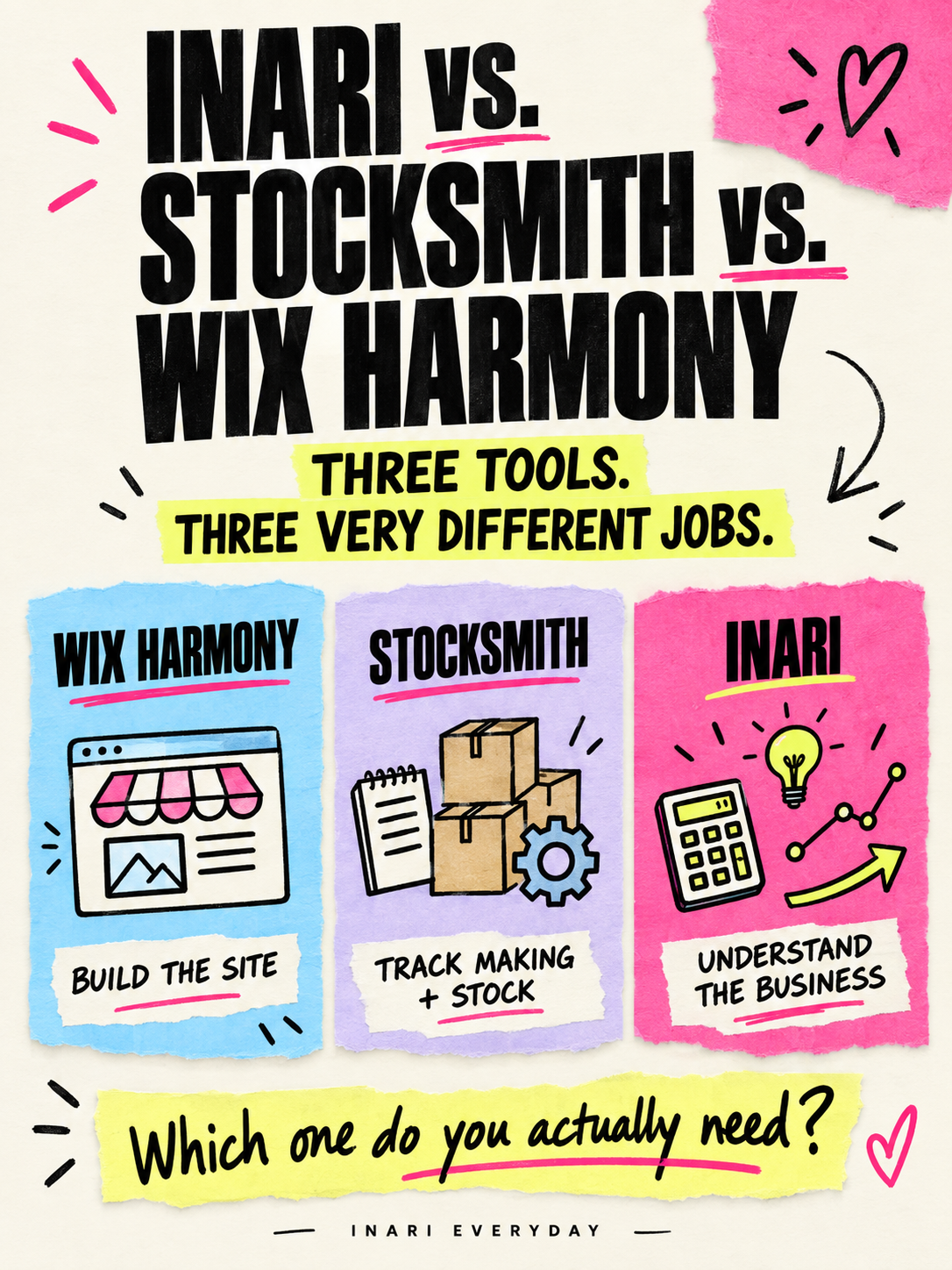
Inari vs. Stocksmith vs. Wix Harmony: Which Small-Business Platform Is Right for Makers in 2026?
Three tools, three very different jobs. An honest comparison of Wix Harmony, Stocksmith (formerly Craftybase), and Inari for makers choosing what their business actually needs.
September 20, 2026 · 22 min read
 AI Without The Bullshit
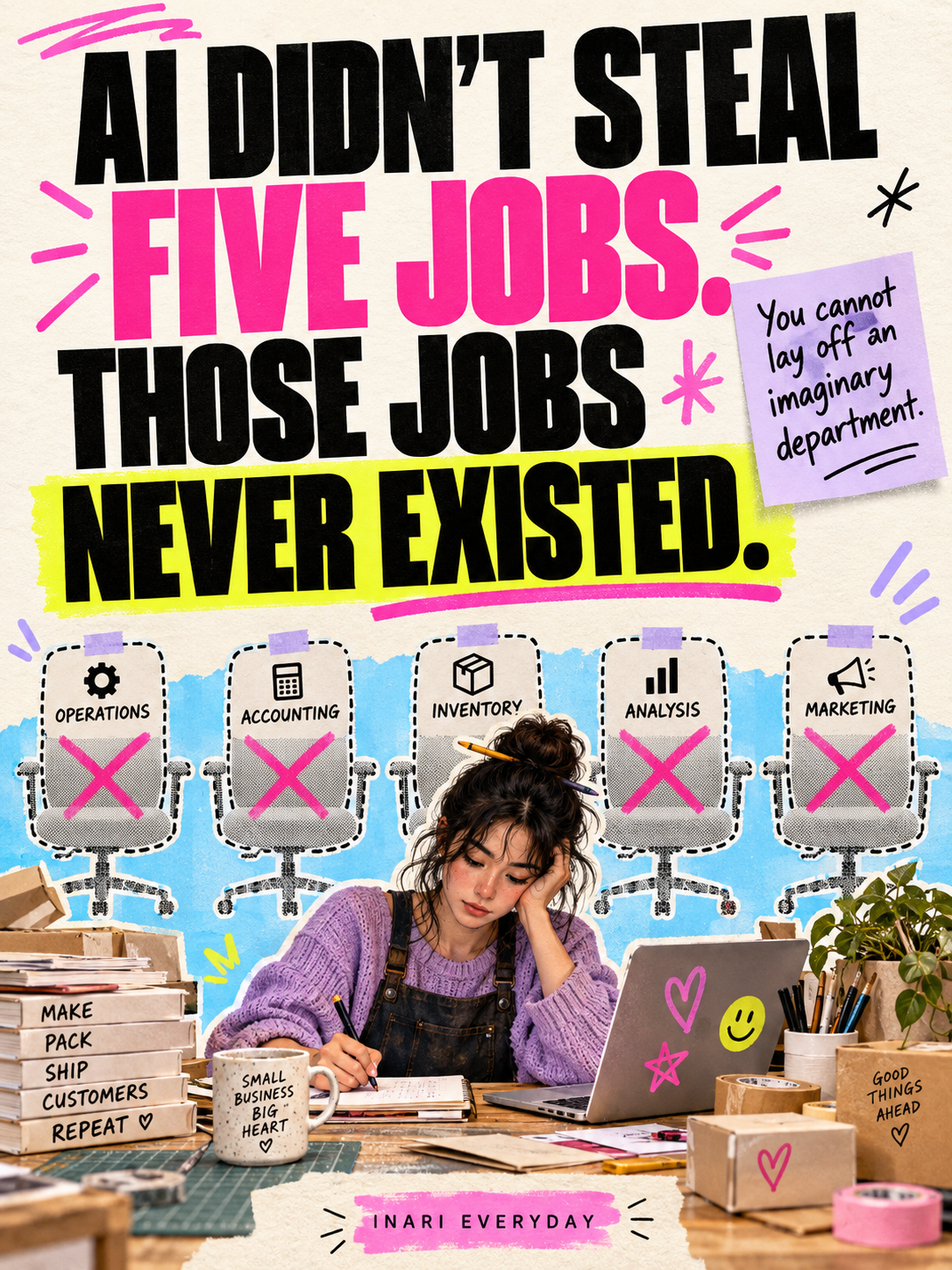
AI Did Not Steal Five Jobs From My Small Business. Those Jobs Never Existed.
Does AI replace small-business jobs? For many tiny companies, the departments never existed. AI can create capacity where there was none.
September 19, 2026 · 8 min read
 AI Without The Bullshit
California Is Exploring an AI “Kill Switch.” Here’s How Inari Is Building for Human Control Now.
California is exploring an AI kill switch. Here is how Inari builds human control, explainability, approval, and graceful degradation into AI for small business.
September 18, 2026 · 10 min read
 The Business Behind The Making
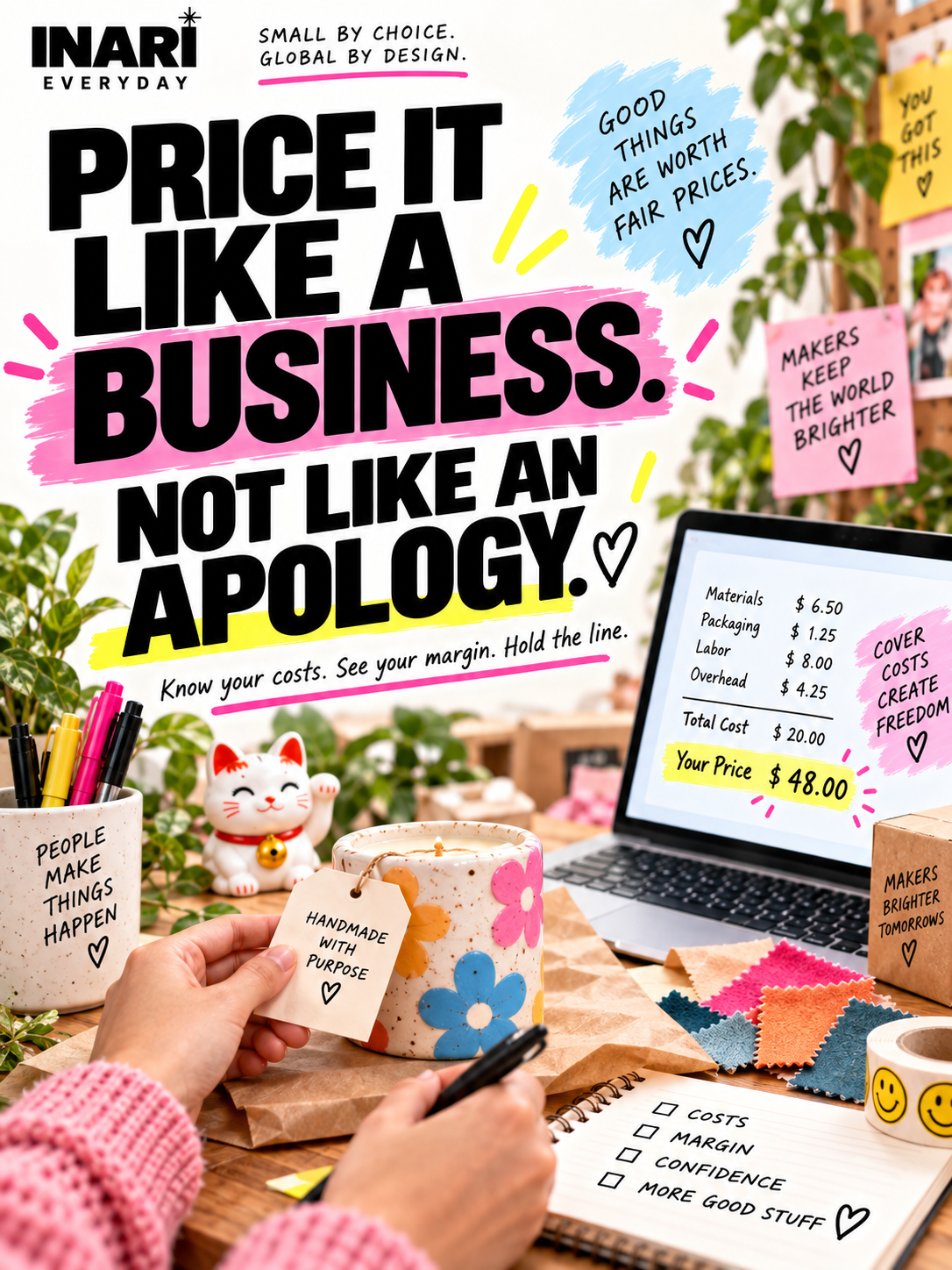
How to Price Handmade Products Without Apologizing for the Number
Why makers undercharge, how to build a price from real costs, and why knowing your numbers beats "charge your worth."
September 16, 2026 · 9 min read
 The Business Behind The Making
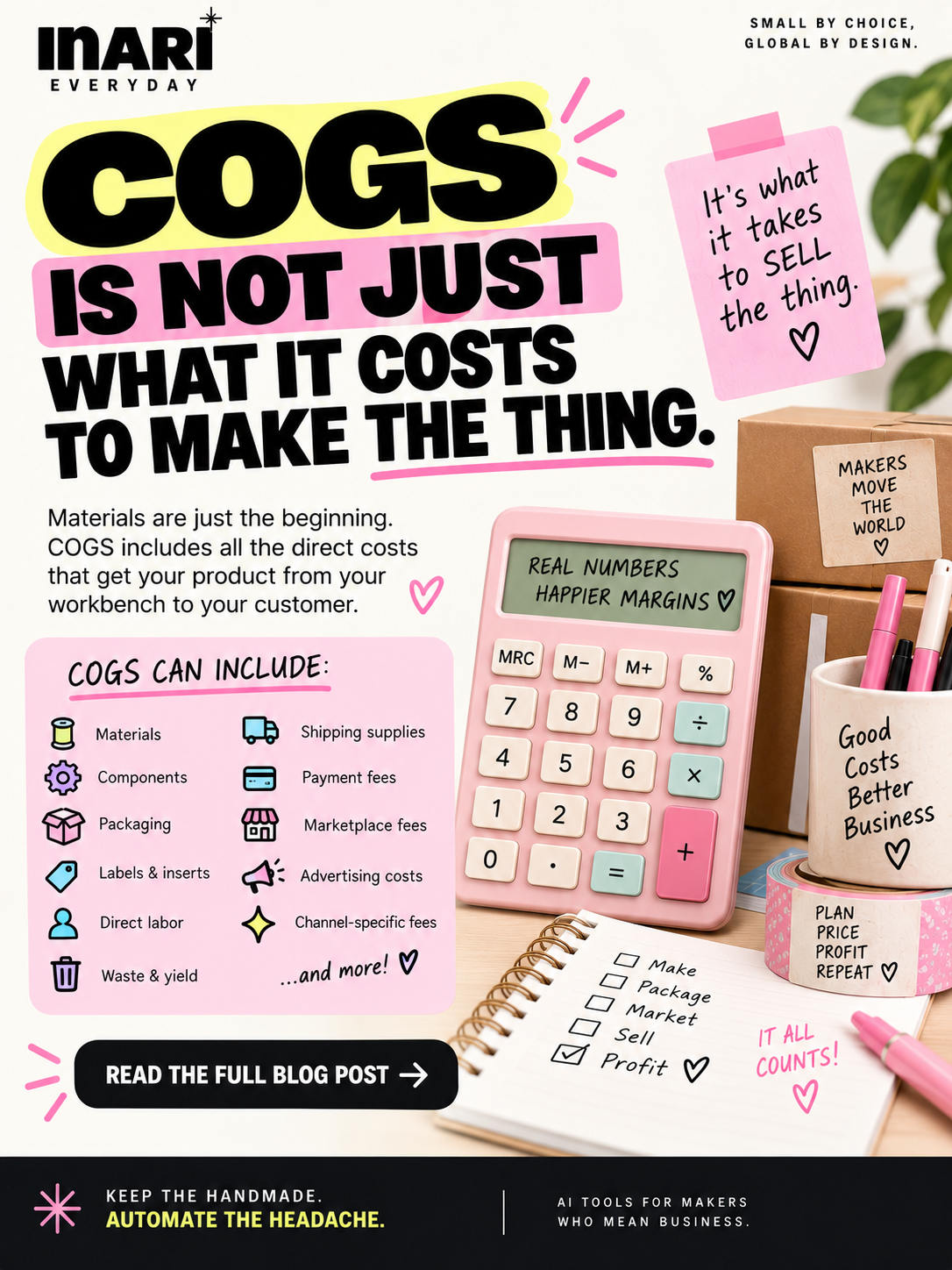
COGS Is Not Just What It Costs to Make the Thing
You bought $3.20 of materials, sold the thing for $18, and think you made $14.80. Oh, sweet summer maker. Here is what Cost of Goods Sold actually means for a small handmade business — and why getting it wrong quietly eats your margin.
September 6, 2026 · 18 min read
 The World Around The Work
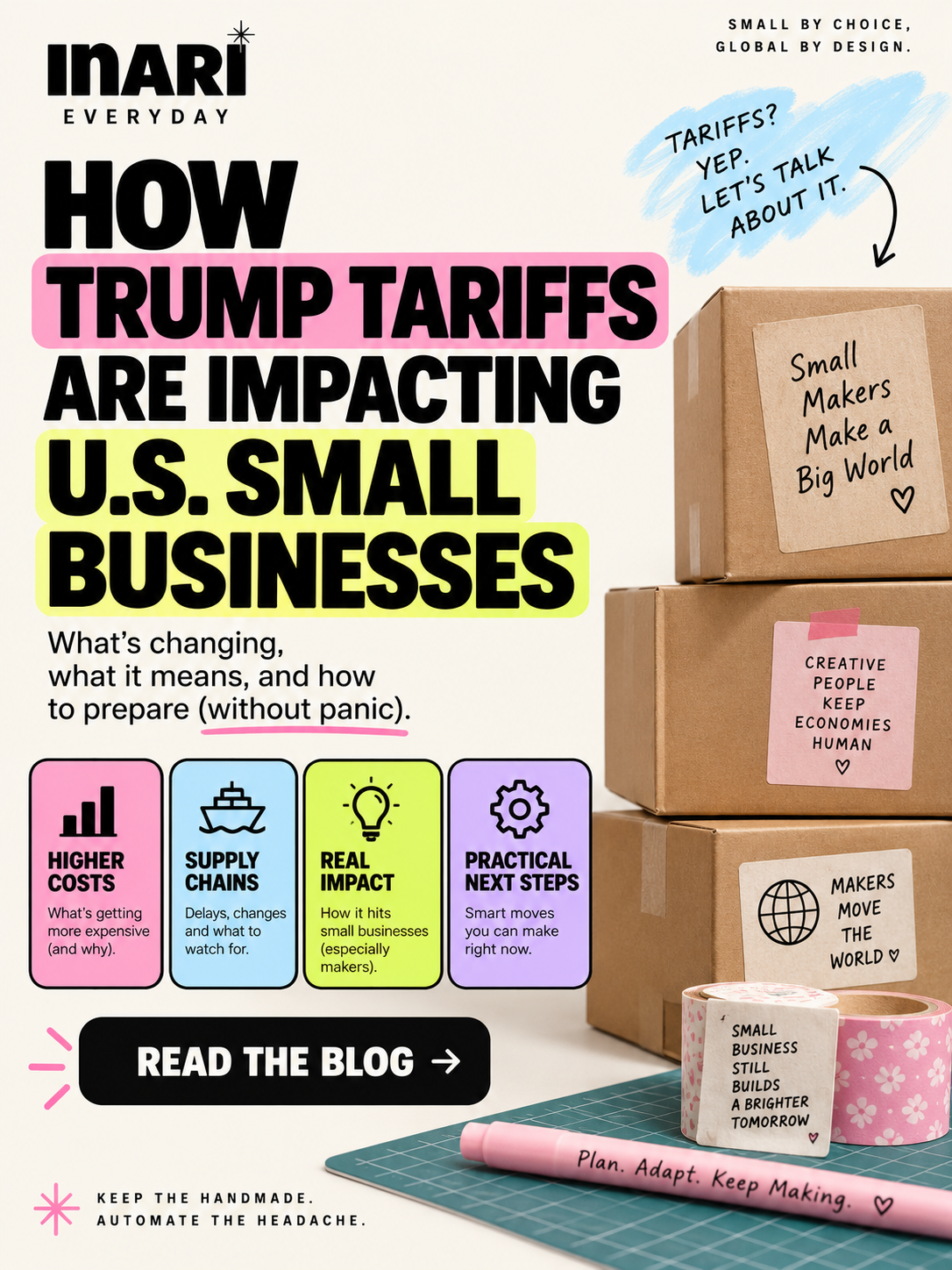
Tariffs Changed Again. Here's What That Actually Means for Small Makers.
If you make things and sell them, the last two years of U.S. tariff policy landed on you harder than most people realize. The plain-English version of what happened — and what it does to your costs, pricing, and margins. With a landed-cost calculator and a rate chart by country.
September 6, 2026 · 12 min read